Russian hybrid warfare backfiring
Posted Tuesday, 10 Feb 2026 by Pavel K. Baev

Russian provocations, from cutting cables on the seabed to drone incursions into the European Union, are recognized as a major challenge to transatlantic security.
The effect of countermeasures to Russian attacks of this kind and sanctions evasion, however, is often overlooked. Admiral Giuseppe Cavo Dragone, the Chair of the North Atlantic Treaty Organization (NATO) Military Committee, stated that the organization is considering more proactive countermeasures and aggressive responses to Russia’s hybrid warfare, particularly in the cyber realm. This statement has widely circulated in Russian media, as countermeasures to Russian hybrid attacks and sanction evasion are a major threat to the Kremlin (Financial Times; Rossiiskaya Gazeta, December 1). Every Western seizure of a “shadow fleet” tanker, for example, is a painful hit on Russian energy exports. Nikolai Patrushev, the chairman of the Russian Maritime Collegium, suggested deploying Russian naval assets to protect these ships, a far-fetched proposition (see EDM, September 4, 2024; The Insider, January 30).
The assassination attempt on Lieutenant General Vladimir Alekseev, the first deputy chief of Russian military intelligence (GRU), in Moscow on February 5 potentially provided an example of an unconventional kinetic attack on Russia (Izvestiya, February 7). Alekseev is under sanctions for organizing the attempted assassination of Sergei Skripal—a former GRU intelligence officer who worked with the United Kingdom’s government—and his daughter Yulia Skripal in March 2018. Alekseev was one of the key minders for Yevgeny Prigozhin and his notorious private military company, the Wagner Group (Novaya Gazeta Evropa, February 6). Russian Foreign Minister Sergei Lavrov blamed Ukrainian special services for the assassination attempt. He accused Kyiv of attempting to derail the peace talks in Abu Dhabi, where the Russian delegation is led by Alekseev’s immediate superior, Admiral Igor Kostyukov (Kommersant, February 6). Ukraine has officially denied involvement in the attack (United24, February 8). The real barrier to peace in the trilateral U.S.–Russia–Ukraine negotiations is Moscow’s demand for a formal international recognition of Russia’s ownership of the whole Donbas region, some of which Ukraine still controls (TASS; Meduza, February 5). Russia’s abrupt end to the “energy truce” suggested by U.S. President Donald Trump and the resumption of massive Russian missile strikes on Ukrainian energy infrastructure have undercut hopes for a breakthrough in peace talks (see EDM, February 2; Radio Svoboda, February 3).
Extreme cold is the Kremlin’s key weapon in the attempt to break Ukraine’s will to resist its aggression. Many Russian cities, including Murmansk, are also suffering from blackouts caused by failures in the energy grid, some elements of which have not been modernized since the mid-1960s (Fontanka.ru, January 25). The lack of funding for upgrades is a direct result of the deepening crisis in Russia’s state finances, driven by the sharp contraction in oil export revenues (Forbes.ru, February 5). Western sanctions are increasingly targeting this vulnerability, and Moscow has no substantive recourse, instead making dismissive statements at provisional calculations of the damage from the forthcoming 20th EU sanctions package (Vedomosti, February 6). Russia’s main hope is that growing economic tensions between the United States and Europe will open new opportunities for the Kremlin to circumvent sanctions (RIAC, January 7). Russia views India as a venue for such opportunities, which Putin’s state visit to New Delhi in December 2025 was meant to cultivate (Valdai Club, February 3). India’s curtailing of Russian oil imports to reduce trade tariffs with the United States dashed these hopes (Forbes.ru, February 5).
Economic troubles are downplayed and denied by the Kremlin. Russians, however, are increasingly worried. Independent media is much more in tune with these concerns than “patriotic” propaganda (Nezavisimaya Gazeta, February 2). A significant majority of Russians wants to see an end to the war, which proves that Moscow is losing its information war, much to the chagrin of jingoist bloggers (TopWar.ru, February 2; Levada Center, February 3). The Russian opposition in exile is able to connect with anti-war audiences inside Russia quite effectively (Meduza, February 7; RIA Novosti, February 8). Despite well-funded efforts, Russian special services are unable to establish effective control over Russia’s internet, and increasingly resort to switching it off completely, causing painful disruptions in urban life (Radio Svoboda, January 28). Every week, more Russian journalists and activists are added to the “foreign agents” list, but the breadth of this label merely confirms the Kremlin’s inability to dominate the information space (Nastoyashee Vremya, February 6).
Since last week, Russian media have focused on the Winter Olympics because excellence in sport has long been a major source of Russia’s “soft power” (The Insider; Novaya Gazeta Evropa, February 6). Kremlin-controlled media trumpets the fact that 13 Russian athletes are competing, but it is not lost on Russia’s vast army of sports fans that a key condition of their selection was the absence of any expressed support for Russian President Vladimir Putin’s war against Ukraine (Izvestiya, January 29). Federal television channels are not showing the games, but all competitions are available on streaming services. The media is full of commentaries, some of which complement the opening ceremony’s uncontroversial character (Kommersant, February 7). In the swirl of opinions on the quality of figure skating performances and the chances of winning ice hockey medals, an underlying sadness persists. At the previous Winter Olympics in February 2022, just before Moscow’s full-scale invasion of Ukraine, Russia was present at full strength, albeit not officially under its flag or anthem because of state-sponsored doping violations. Still, in 2022, Russia was viewed as a mostly normal country, not as a menace casting a dark shadow of war over Europe (The Moscow Times, January 30; Championat.ru, February 7).
Multiple setbacks for Russia on various unconventional domains of the war against Ukraine are eroding Putin’s claim of a steady march to victory. Every square kilometer of the Donbas that Russia gains at the cost of hundreds of lives adds to the impression—internationally and inside the country—of a self-defeating strategy driving Russia’s degradation. The Kremlin’s attempt to alter this impression through hybrid warfare is backfiring, compelling the European Union to redouble its countermeasures. Admiral Dragone’s statement acknowledged that legal norms and moral conventions constrain NATO allies’ responses, while Russia operates without such limitations. This “advantage” is, nevertheless, a source of significant risks for Russia, as every act of sabotage invites responses of punitive power. Self-restraint would have been a rational choice, but Putin’s choices appear increasingly shaped by spite and fear.
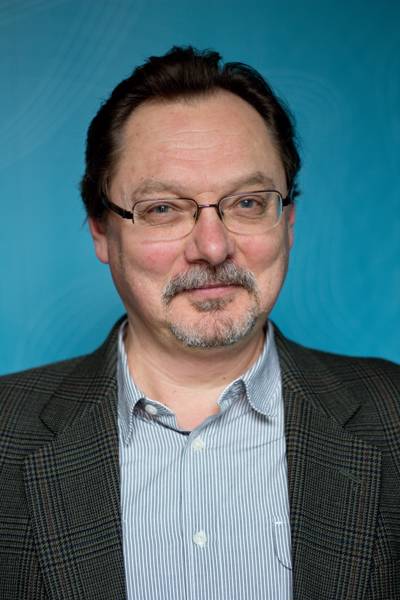
- Pavel K Baev is a Research Professor at PRIO
- This article is also published by Eurasia Daily Monitor
Related comments