Assad’s fall gave hope, but the future hangs by a thin thread
Posted Thursday, 8 Jan 2026 by Jørgen Jensehaugen

Just over a year has passed since Assad’s brutal dictatorship fell and millions of Syrians regained hope. But with faltering support for refugees and reconstruction, and fears of new conflicts, hope is wearing thin. President Bashar al-Assad’s abrupt departure from Damascus as a deposed dictator sparked huge joy among countless Syrians. An era of tyranny and brutal civil war was ended.
In the countries hosting Syrian refugees, hopes were high that the refugees could return home. And although a million refugees have returned, the situation now is far more uncertain.
A shortfall in humanitarian aid is exacerbating the situation in host countries and preventing sufficient improvement in Syria.
A country in ruins
It is difficult to truly appreciate the impact on Syria and the surrounding region of the 14-year-long civil war. The numbers of deaths were so enormous, and access was so difficult, that the UN stopped counting fatalities. Estimates put the number of people killed at over 500,000. The country was reduced to ruins, especially after the regime adopted its extreme slogan: Assad, or we burn the country. And the country, quite literally, burned.
Cities were peppered with barrel bombs and chemical weapons. In addition, there were Russian airstrikes and later, airstrikes by Western countries on Islamic State targets. Turkey invaded in the north. The Syrian opposition fragmented, consolidated, and refragmented, while all the time, foreign fighters and shipments of weapons were streaming in.
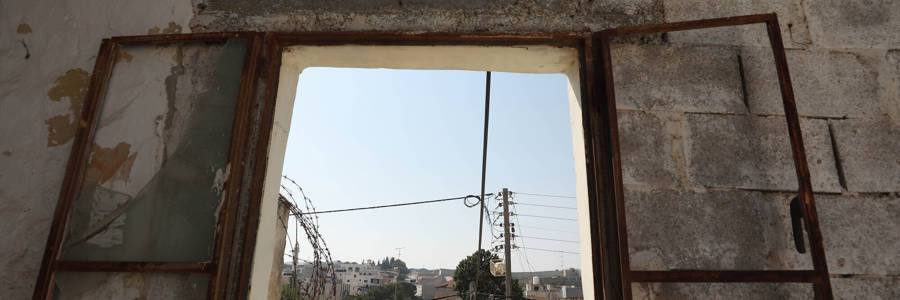
At the same time, tens of thousands of Syrians disappeared into the industrial-scale torture chambers operated by the Assad regime. Large parts of Syria resemble Gaza, with ruins extending as far as the eye can see.
How does one recover from something like this? This question has both physical and economic dimensions – how does one rebuild a country after such destruction? And there are also questions relating to society and the nation as a whole – how can one rebuild trust and national cohesion after such horrors?
For the millions of Syrian refugees now living in neighbouring countries, these are existential questions.
- Can one return home after such events?
- Is there any home left to return to?
- What is left of the Syria that they, or their parents, fled when the war became too intense?
- Is there any work to provide a living?
- Is there power, food, and water?
- Are there schools for their children?
- Are there landmines or other undetonated explosives on their properties?
- Can one trust neighbours, or even one’s own relatives, who chose a different side in the conflict?
This last question is perhaps what makes civil war the most painful kind of war. Even before the war started, levels of trust in Syria had worn thin, because the regime made such extensive use of informants.
All these important questions are deeply personal, but they also affect millions of people. When the situation was at its most intense there were 5.5 million Syrian refugees in the region, in addition to over 7 million internally displaced people, and over a million refugees in Europe.
Expectations about returning
When the Assad regime fell in December 2024, there was a watershed in expectations about returning. Although uncertainty hung in the air, there was also euphoria about the departure of the Butcher of Damascus. Prison gates were opened and people flooded inside with hopes of finding their loved ones. Far too many were disappointed. But there was a clear sense of relief that the infamous prisons were closed and empty. Their presence had dominated and weighed down the country for decades.
The secret police (mukhabarat) that had terrorized the population were disbanded. And the ever-present threat of conscription evaporated. There is a striking contrast between the results of opinion polls conducted by the UN Refugee Agency (UNHCR) before and after the fall of the Assad regime. In January 2025, 27 percent of Syrian refugees polled in neighbouring Arab countries responded that they wished to return to Syria in the coming year. The previous year, only 1.7 percent had given the same answer.
At the same time, millions of Syrians voted with their feet. By the end of September 2025 around a million Syrian refugees had returned home, as had 1.8 million internally displaced persons.
These are large numbers, but very soon the picture became more complicated. In the year following the fall of the Assad regime, over 400,000 Syrians fled the country. They were a diverse group. Some fled right after the old regime collapsed because they feared the new regime. Some fled because of sectarian violence that broke out in Sweida and along the coast. Yet others fled because of Israeli attacks in the south.
These new reasons to flee also stoked reluctance to return among Syrians who were already refugees and considering their options for the future. On top of all the questions listed above, we can add another: Is there a risk of a new civil war?
Major political issues must be resolved, and there is no easy path to a functioning state where the answer to that question may be a clear no. Such uncertainty is enough to keep many people away.
The disappearance of aid
In this precarious situation it is necessary both to maintain aid – preferably via the UN Refugee Agency – to the surrounding host countries, which continue to house millions of Syrians, and also intensify the provision of aid to Syria, so the country can be rebuilt. Unless Syria can be rebuilt, creating jobs and securing infrastructure, discontent will increase drastically. People can’t eat the euphoria generated by prison closures. Right now, the country’s future hangs in a very fragile balance. Because although large sums of money have been promised, they have not yet benefited the country’s inhabitants. Talking points in Brussels and Riyadh do not put food on the table. Unfortunately, there is currently fierce competition for dwindling aid funding. Who will pay for aid to Gaza, Ukraine, Sudan and Syria, in a situation where the United States has cut off its humanitarian aid? No one has a satisfactory answer to this question, but the figures speak for themselves: in 2025, the UN Refugee Agency’s Lebanon budget was 91 percent underfunded.
91 percent.
Refugees therefore find themselves in even worse situations where they are, while they wait for non-existent aid to develop a country they want to return to.
- Jørgen Jensehaugen is a Research Professor at PRIO
- This text was first published in Norwegian by Panorama Nyheter
Related comments