Lebanon in the crossfire: Ten key points about the impact of the US-Israeli war on Iran
Posted Monday, 23 Mar 2026 by Pinar Tank & Jørgen Jensehaugen

The stated objective of the US–Israel war is to target the Iranian regime; however, it has had an outsized humanitarian impact on Lebanon. Most media attention is presently drawn to critical questions about the survival of the Iranian regime, the impact of Iran’s chokehold of the Strait of Hormuz on the global economy and the wider implications of the war spreading in the Gulf. The impact of the war on Lebanon is often mentioned only as an extension of Israel’s war on the Iran-supported Hezbollah. Here, we argue from a humanitarian perspective that focus needs to be more specifically on Lebanon and the long-term impact of the war.
This short primer presents 10 key points to understanding the dynamics behind the Israeli war on Lebanon and its potential consequences:
1. Size matters
Lebanon has a population of almost 6 million. This means that the one million displaced Lebanese (at the time of writing) make up close to 20% of the population. Importantly too, this massive displacement has occurred in the timespan of a couple of weeks. This recent displacement comes on top of previous displacement due to Israeli offensives against Iran-backed Hezbollah who have operated from Lebanon’s south where Israel has destroyed entire villages, thereby reducing the possibility of return.
2. Population density matters
Lebanon is around the size of Cyprus but has 4.6 times the population of Cyprus. For context, Germany is 34 times larger than Lebanon but has only fourteen times its population. The targeted southern suburbs of Beirut had a population of 500-600 000 people, making them some of the most densely populated areas in the world. This means that Israel’s bombing inevitably results in ‘collateral damage’ to civilians and infrastructure.
3. Internally displaced populations have nowhere to go
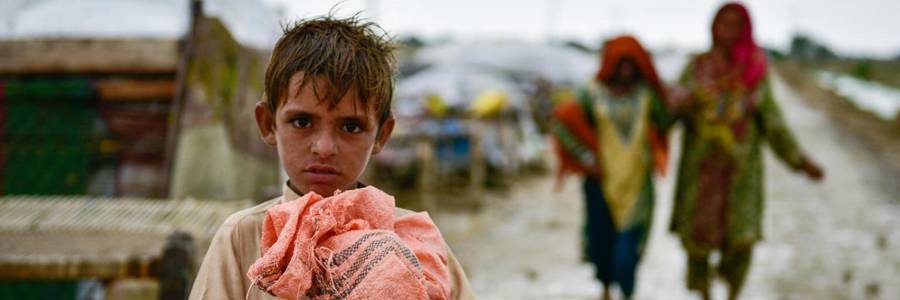
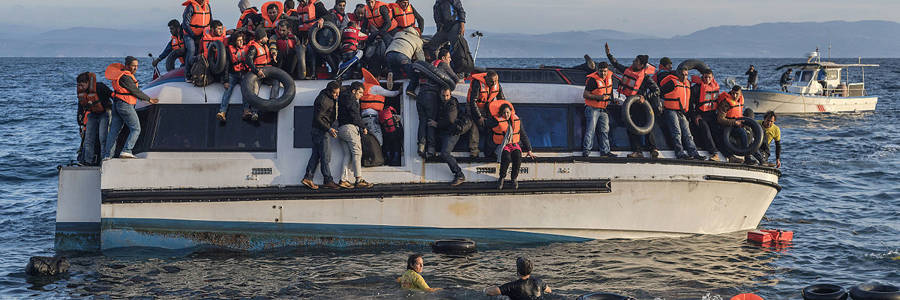
Most of Israel’s missiles have targeted the south of Lebanon and the southern Beirut suburb of Dahiyeh. This neighbourhood was historically populated by Lebanese fleeing bombing in the south and those from the eastern Bekaa region who came for economic reasons. Over time, it became the stronghold of Lebanon’s Shia population, which generally are more sympathetic to the ideological and political influence of Hezbollah. Many Lebanese Shia came here during Israel’s last bombing campaign and have now been internally displaced a second time with limited options for resettlement. They have lost both homes and livelihoods, throwing them into a condition of precarity. Evacuation orders by the Israeli military continue, such as in Tyre, a city of 60 000, which leads to an exodus of people forced to flee. As of 17 March, according to the International Organisation for Migration, 125 000 people have crossed the border into to Syria, half of them children. This illustrates how dire the situation is in Lebanon and adds to the concerns of further instability due to potential for conflict spillover.
4. Lebanon already hosts the highest number of refugees per capita in the world
In the fourteen years of the Syrian War (2011-2024), Lebanon hosted approximately 1.5 million Syrian refugees. This had already put enormous pressure on the Lebanese economy and infrastructure, and it created political pressures internally. In addition, Lebanon hosts approximately 500 000 Palestinian refugees. These refugee groups live in deep poverty as both UNRWA and UNHCR suffer from gross underfunding. The fact that Lebanon already struggles to host so many refugees means that the country is ill-equipped to handle internal displacement.
5. The economy was in modest recovery until the US-Israel war on Iran
After years of economic crises brought on by a severe financial collapse (2019) followed by the Beirut port explosion (2020), the World Bank (WB) noted the start of recovery in 2025 backed by progress on Lebanon’s reform agenda and the passing of key economic and judicial laws. These increased political and institutional stability. Real GDP growth was projected at 4% in 2026. However, the WB issued a warning: this could be undermined by delays in reforms or regional instability. It is safe to assume that all such gains are being wiped out, and then some, with massive destruction and a collapse of the tourist industry so vital for future income.
6. Why Hezbollah is so powerful in Lebanon
Hezbollah’s power is built on a combination of elements. Historically the sectarian structure of Lebanese society disfavoured the Shia population. Hezbollah filled that gap by providing a political voice, social services and military strength in the context of the civil war (1975-1990) and the Israeli occupation (1982-2000). Hezbollah also received weapons and training from Iran and cooperated closely with the Assad regime in Syria. This made the movement uniquely well-armed, making it the strongest single actor in Lebanon. It is important to keep both the sectarian nature of the organization and the external military backing in mind when analysing Hezbollah because these elements reinforce one another and help explain why Hezbollah is such a deeply rooted part of Lebanese society.
7. Why Lebanon struggles to disarm Hezbollah
UN Security Council Resolution 1559 (2004) explicitly called for the disbandment and disarmament of all the militias and organizations within Lebanon, including Hezbollah. Earlier in 1989, the Taif Agreement that ended the Lebanese Civil War had exempted Hezbollah from disarmament because it was the only “resistance force” capable of fighting the Israeli occupation, which ended in 2000. A new Lebanese government formed in February 2025 made disarmament a priority. Due to concerns over domestic stability, however, this was to occur through negotiations (embedded within a wider national defense strategy) rather than through force. The Lebanese army confiscated weapons and dismantled military facilities in southern Lebanon as agreed in the November 2024 ceasefire between Israel and Hezbollah. However, the government was acutely aware of the dangers of the process as Israel continued its attacks in the South and the Lebanese army was not in a strong enough position to deter Israel. However, following the start of this round of conflict, the Lebanese government has taken unprecedented steps declaring Hezbollah’s military activities to be illegal and calling for direct negotiations with Israel to end the violence.
8. Lebanon has governance challenges
Lebanon’s succession of weak caretaker governments (2020 -2025), sectarian divisions and fragmented power-sharing system make it difficult to negotiate effectively with Hezbollah. As both a political actor within the state and an armed group with strong regional backing, Hezbollah has operated from a position of relative strength. The formation of the Cabinet of Nawaf Salam in February 2025 brought with it a hope of ending years of institutional paralysis. However, the present security situation has brought with it new political uncertainty. Lawmakers decided to delay the May 2026 parliamentary elections for two years as a result of the impossibility of holding an election in the present climate of national emergency and ongoing mass displacement. The two-year delay was suggested by Speaker Nabih Berry, an ally of Hezbollah, who fear punishment at the polls for inciting Israel’s onslaught on Lebanon.
9. The sectarian issue raises fears of state fragmentation
Hezbollah’s actions may worsen the situation for the Shia in Lebanon who are approximately 30% of the population. In a deeply sectarian political setting, being Shia often carries with it the assumption that you are a Hezbollah supporter. Since Israel targets Hezbollah affiliates anywhere in the country, people are negatively inclined to house internally displaced Shia since that can increase the risk of getting one’s house bombed. Deepening distrust can have societal ramifications for a society built on a sectarian structure. This has led to two civil wars in the past (1958 and 1975-1990) and is an ever-overhanging threat in Lebanon. Israel is fully aware of this potential and has dropped leaflets asking the Lebanese population to turn on Hezbollah.
10. Lebanon is resilient, but at what price?
In the past 50 years Lebanon has experienced almost constant conflict. A brutal 15-year civil war (1975–1990), followed several Israeli invasions (1978, 1982, 2006, and 2024–25), foreign occupations (Syria/Israel), sectarian violence, and deep economic crises. Still, the Lebanese pride themselves on their resilience. However, Hezbollah’s decision to retaliate against Israel has resulted in a backlash of anger by civilians caught in the crossfire. One thousand Lebanese have died in a population of 6 million. (By comparison, approximately 1500 deaths have been reported in Iran, a population of 92 million, though Iran’s internet shutdown makes it difficult to establish reliable figures.) Nonetheless, based on what we now know, in terms of human suffering the US-Israel war is taking a heavy toll on Lebanon. Lebanese resilience is being tested in a population worn down by conflict, once again caught in the crossfire of regional rivalries.
- Pinar Tank and Jørgen Jensehaugen are respectively Senior Researcher and Research Professor at PRIO
Related comments