Norwegian peace diplomacy - is it facilitation or mediation? And why this matters.
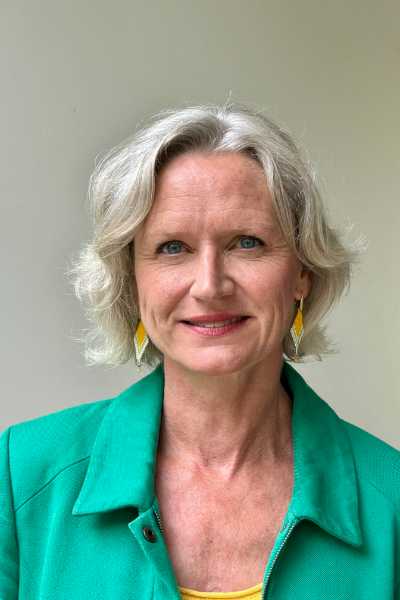
Posted Wednesday, 17 Jun 2026 by Solfrid Lien

It is a tradition in Norwegian peace diplomacy to say they are “only facilitators”, and theories on mediation are seen as of little relevance. However, looking at the practice through a scientific lens, they are mediators.
It is timely to re-examine how the practice is defined and understood. What might seem a technical detail feeds into a larger discussion about peacemaking as still a young field in want of strengthened professionalization through rigorous self-scrutiny.
A narrative of practice still in the making
After three decades of third-party engagement in conflicts around the world, the Norwegian Government presented its first white paper on Norwegian peace diplomacy in June 2025. Research and memoirs from diplomats have over the years contributed in different ways to insight into what it means in practice. The white paper adds to these perspectives by giving us the policy level narrative of conflict diplomacy in practice.
The different roles of Norwegian peace diplomacy
The white paper outlines four primary roles for Norwegian peace diplomacy: Contact diplomacy, informal facilitation, formal facilitation that may border on mediation (emphasis added), and contributions to processes formally led by others. However, what is meant by mediation and how it differs from formal facilitation is not explained.
To what extent are Norwegian peace diplomats mediating and what does it imply? If sometimes mediating, can mediation theory inform their practice? These were questions I asked six practitioners for my master thesis “Norwegian Peace Diplomacy as a Reflexive Practice?” in Conflict Resolution and Mediation studies (2020). My findings showed a flexible and dynamic practice with a potential for greater conceptual clarity.
“From a very withdrawn role to a more forward leaning mediator”. This quote from my thesis captures the role descriptions by all but one of my interviewees. While close to that of the white paper, it is clearer about also taking on a mediating role. The practice can alternate between being a withdrawn facilitator and a forward leaning mediator in different processes, but also during the same process and within a short time. A facilitator was described as an informal messenger who shuttles between the parties, often with a low profile. Sometimes also creating a space for the parties to meet, while themselves leaving the room. The work consists largely of practical problem solving and logistics. A mediator, on the other hand, was associated with influencing, someone that proposes solutions and texts, exerting pressure on the parties through persuasion. This role the interviewees distanced themselves from. However, while they prefer not to mediate, the situation sometimes requires it.
“Norway relies more on humanization of the diplomatic role than on professionalization of the mediator role.” This reflection by one interviewee referred to how Norway most frequently is involved in “the emotional phase” prior to formal negotiations [i], which is about motivating the parties to engage with each other towards a peaceful solution. All six interviewees emphasized trust building as the key instrument for establishing their role with the parties. This through listening more than speaking, cultivating confidentiality, empathy and humility. In a phase of direct meetings between the parties, their role could be that of a witness and guarantor, their presence contributing to trust building between the parties.
“They (the parties) believe that Norway is state of the art. They have a lot of goodwill. So, I'm glad they don't know how insecure we were." This was reflected by one interviewee about how to approach meetings or dilemmas. It was a lot of “improvisation” and “common sense”. Most of the interviewees found mediation theory of little relevance for their work. One saw a potential in perspectives from mediation in smaller scale conflicts, noting that “there are many small conflicts within the big conflicts”. As for qualifications, apart from historical-political knowledge and language skills, all emphasized personal suitability together with experience, from “being thrown into processes”. Learning by doing is seen as essential.
Analyzing practice – some paradoxes unveiled
Seen through a scientific lens, Norwegian peace diplomacy can be understood as mediation. Moreover, the sharp distinction made between facilitation and mediation roles seem paradoxical, as they are in many ways the same.
The descriptions of practice coincide with what is understood as facilitative mediation or classic mediation in studies of international conflict resolution. [ii] They are also in line with the basic principles of reflexive mediation, a Danish model for court mediation and other conflict resolution. [iii]These include principles about the parties' self-determination, confidentiality, the impartiality of mediators, the role of emotions and that each conflict is unique.
To mediate is by the practitioners associated with being directive, someone who wants to influence. In mediation theory this is defined the other way around; a mediator being a process manager who works with the parties' communication. A midwife for constructive dialogue. The role is not passive, but that of someone actively probing into the underlying interests and needs of the parties, the drivers of the more pronounced positions and demands of parties in conflict [iv]. That which Secretary of State Kravik during the launch of the white paper phrased as Norway’s strength, “to decode, decipher, what motivates other actors and states”.
Scholars debate whether approaches that are controlling, manipulative, or coercive meet the criteria for being called mediation. However, as so-called muscle mediation may also contribute to conflict resolution, this is increasingly accepted as a form of mediation. Similarly, it is recognized that a mediator with so-called soft power also can influence through persuasive strategies. Norway, a small nation, first and foremost has soft power.
Studies find that changing between styles of mediation is not uncommon. [v] Knowing one’s preferences [vi] and being aware of how these, along with contextual and structural factors influence the mediation [vii] is a key resource in the role as third party.
A knowledge-based platform provides alternatives for action and mitigates reactiveness. This as opposed to a still widespread belief that mediation is “an art”, something you have a special talent for, more than a set of skills you can learn. There is no either or, mediation is both an art and a science. [viii]
Why avoid the term “mediation”?
In my study, different explanations were given for avoiding the term. Firstly, mediation (understood as being directive) only occurred exceptionally. Secondly, a consideration for the parties’ ownership of the process and wanting to avoid expectations of a (directive) mediator doing the problem solving. Thirdly, a consideration for the autonomy of the parties, they would not be comfortable saying that someone is mediating in their conflict. Also, that mediation in some contexts is associated with arrogance and colonialism.
One interviewee reflected that it has become a mere tradition to say, “we are never mediators, we are facilitators”, but that it might be time to move out of this inherited, intuitive understanding towards “a formulated toolbox" in terms of a richer and more precise language for their practice. This, it was reflected, could reassure parties to a conflict of the diplomats’ professionalism, as well as deepen the diplomat’s insight into his or her own practice.
An untapped potential
For Norway, peace diplomacy has become somewhat of a trademark. Yet, framing of practice appears vague and downplay its role and level of engagement. Norway’s practice of peace diplomacy corresponds to what theories define as mediation. Turning the above quote on its head; a humanization of the diplomatic role is a professionalization of the mediator role. The recent white paper indicates that this remains unacknowledged. Here is an untapped potential. The field of peacemaking is in urgent need of harmonized standards and best practices along with systematic and institutional learning. A precise language for ”what” is a useful starting point for the larger discussion about the “how”. A clarification of roles would show that mediation theories apply to Norway’s practice. This would not only support Norwegian peace diplomats in their professional practice, but input to a much needed, yet troubled, field in a world that is burning.
- Solfrid Lien holds an MA in Social Anthropology from School of Oriental and African studies (1995) and MA in Mediation and Conflict Resolution, University of Copenhagen (2020) with thesis Norwegian Peace Diplomacy as a Reflective Practice? How does Norway's third-party role in peace processes correspond to mediation theory, and is the theory perceived as relevant to those who do this work? Solfrid Lien is a member of Nordic Women Mediators - Norway.
[i] Nissen, A. (2015). The Peace Architects. Norwegian Diplomacy since 1989. Faculty of Humanities. Oslo: University of Oslo.
[ii] Bercovitch, J. (2009). Mediation and Conflict Resolution. I J. Bercovitch, V. Kremenyuk & I.W. Zartman (red.), The SAGE Handbook of Conflict Resolution (s. 340–357). Sage Publications.
[iii] Vindeløv, V. (2020). Konfliktmægling - en refleksiv model. København: Jurist- og økonomforbundets forlag.
[iv] Vindeløv V. (2013) Konfliktmægling - en refleksiv modell. København: Jurist- og økonomforbundets forlag.
[v] Wall, J., & Kressel, K. (2012). Research on Mediator Style: A Summary and Some Research Suggestions. International Association for Conflict Management and Wiley Periodicals, Inc (Volume 5, Number 4), ss. 403-421.
[vi] Kressel, K. (2014). The Mediation in Conflict. Context, Cognition, and Practice. I P. T. Coleman, M. Deutsch, & E. C. Marius, The Handbook of Conflict Resolution (ss. 817-848). San Fransisco: Jossey-Bass.
[vii] Honeyman, C. (2006). Understanding Mediators. I A. Kupfer Schneider et. al. eds., The Negotiator´s Fieldbook (ss. 581-590). American Bar Association (ABA).
[viii] Lang, M. D., & Taylor, A. (2000). The Making of a Mediator. Developing Artistry in Practice. San Fransico: Jossey-Bass.