Putin intensifies missile attacks against Kyiv ahead of NATO summit
Posted Wednesday, 8 Jul 2026 by Pavel K. Baev
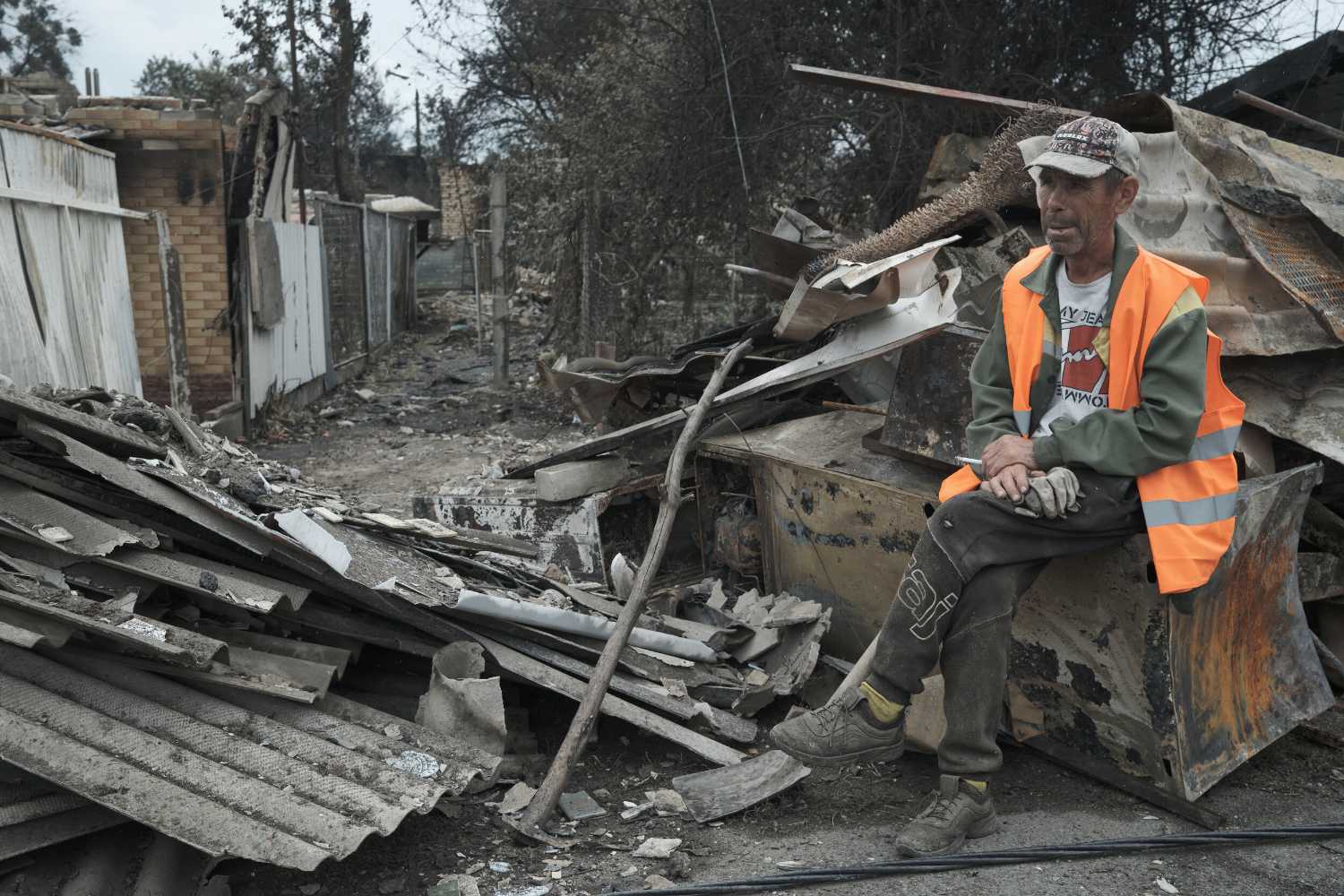
Massive Russian missile strikes on Kyiv on July 2 and July 7 marked a shortened interval between large-scale air attacks.
In 2025 and the beginning of 2026, Russia typically carried out three to four such assaults every month, each comprising about 500 drones, 24 cruise missiles, and 24 ballistic missiles (Re: Russia, June 16). In May and June combined, only four of these attacks occurred, meaning the Kremlin accumulated a stock of weapons for the double strike in July.
In all these assaults, Ukraine intercepted close to 90 percent of drones and cruise missiles (TopWar.ru, July 3). Ballistic missiles, however, inflicted major damage. Only U.S.-supplied batteries of MIM-104 Patriot surface-to-air missiles are capable of intercepting Russian ground-launched Iskander-M and air-launched Kinzhal missiles. Ukraine’s shortage of these interceptors leaves Kyiv and other Ukrainian cities exposed to direct ballistic missile hits (Meduza, July 2).
Moscow is perfectly aware of this vulnerability. Russia, however, has not exploited this advantage by scaling up ballistic missile use. The main Russian producer, the Votkinsk plant, was hit by Ukrainian missiles only once, in February, but its supply chains have been crippled by strikes on plants in Voronezh, Volgograd, and other localities (Volgograd-KP.ru, July 3). Production of other missiles, such as the Bulava sea-launched missile in Votkinsk, is probably paused, so the newest Knyaz Pozharsky submarine, which joined the Northern Fleet in August 2025, has not even performed a test launch (DeepStorm.ru, July 4). Russian President Vladimir Putin used to brag about the destructive power of the medium-range Oreshnik ballistic missile, but admitted that the strike on May 24 was a test rather than a “true combat use” (see EDM, June 15; The Insider, June 29). An anticipated follow-up launch in mid-June never materialized.
Putin has recently described Russian strikes as “retaliation” for Ukrainian strikes inside Russia. In his view, Ukrainian mid- and long-range strikes are attempts to cover up the supposedly relentless offensive operations of Russian forces (Re: Russia, June 30). On July 3, Putin staged a visit to an oddly decorated command center to listen to elaborate reports on the supposed capture of the Ukrainian city of Kostyantynivka, which available evidence suggests is untrue. Mainstream Russian media and jingoist commentators hailed this major “victory” (Rossiiskaya Gazeta; TopWar.ru, July 4). Chaotic fighting in Kostyantynivka is continuing, and the declarations on its “liberation” are as disingenuous and openly self-aggrandizing as the Kremlin’s false claims that it captured Kupiansk last November, which Ukrainian President Volodymyr Zelenskyy visited in mid-December (Novaya Gazeta Europe, July 4). Russia’s spring–summer offensive in Donbas has yielded minuscule territorial gains at the expense of record-high casualties. Putin’s order to sustain attacks and keep the strategic initiative may bring the demoralized Russian “big battalions” to the brink of breakdown (Radio Svoboda, July 2; NV.ua, July 5).
One pressing reason for Putin’s expansive declaratory offensive is the decline of his popularity. Even semi-official opinion polls cannot hide this downturn (Meduza, July 3). Russians may be remarkably indifferent to mounting casualties, but the Kremlin cannot hide black smoke from Russian refineries and long lines of cars at gas stations (Levada Center, July 2). Putin’s claims of strengthening air defense are disproved every day with Ukrainian strikes on Russia’s target-rich energy infrastructure. The widespread understanding of the inevitability of greater damage from further Ukrainian strikes paints a gloomy economic outlook (The Moscow Times, July 1). Russia is sinking into economic recession, and government technocrats no longer appear as hopeful about limiting its depth and duration (Carnegie Politika, July 1).
Putin timed his July 2 and July 7 strikes on Kyiv to make an impression on the July 7–8 North Atlantic Treaty Organization (NATO) summit in Türkiye (Gazeta.ru, July 5). Putin announced a thorough evaluation of the volume of support to Ukraine from NATO member states, saying, “We need this analysis for possible decision-making in the future” (RBC, July 3). Moscow experts are eager to clarify that this threat is aimed specifically at the Baltic states because of their involvement in military cooperation with Ukraine and alleged help in channeling the drone attacks to St. Petersburg (Rossiiskaya Gazeta, June 29). Other Russian pundits claim that Europe has lost its fear of a direct military conflict with Russia, but that the U.S. intention is to stay away from such a clash (RIAC, June 25).
Russian media is predicting a split in NATO after U.S. President Donald Trump’s call with Putin on July 4 (President of Russia, July 4; Kommersant, July 5). Patriotic commentators argued that the capture of Kostyantynivka prompted Trump to make the long call, without noting that he had first spoken with Zelenskyy (RBC, July 4; News.ru, July 5). Trump, however, has received plenty of insights on Russia’s dire political and economic situation, including from the European allies at the Group of Seven (G7) summit in Evian, undermining Putin’s claims that he is progressing from one victory to another (BFM.RU, July 5). Tiny alterations in the wide “kill-zone” are of scant significance for the course of the war, but the crisis in Russia’s finances certainly is (The Moscow Times, July 2).
Contradicting Putin directly is impossible in the rigidly policed Russian public spaces. Various expressions of discontent with the deadlocked war and escalating confrontation with the West, however, are appearing even in mainstream Russian media (Nezavisimaya Gazeta, June 28). Putin’s rigid course of continuing the war is increasingly perceived not as “more of the same” but as a slide down a steep slope toward disaster. Expectations in Moscow for a break in this downhill trajectory granted by a surge of discord at the NATO summit in Ankara are in the category of a desperate stretch of imagination rather than sober assessments. Large attacks on Kyiv are generating stronger European resolve to deter and extinguish the Russian threat in all its manifestations.
These Ukrainian measures, often described ironically as “kinetic sanctions,” are reinforced by European economic pressure. The European Union approved its 21st package of sanctions on July 23, targeting Russian refineries, military enterprises, and vessels linked to Russia’s shadow fleet (Forbes.ru, July 23). Russian commentators initially focused on disagreements over the package’s contents and predicted that EU High Representative for Foreign Affairs and Security Policy Kaja Kallas would fail to secure tougher measures. They have since shifted toward minimizing the significance of restrictions whose scope is unprecedented (Izvestiya, July 23). The European Union aims to prevent any increase in Russian export revenues, particularly amid new spikes in oil prices caused by escalating hostilities in the Persian Gulf region (Kommersant, July 24).
The tightening EU sanctions regime is hitting Russia hardest amid a deepening recession that even the Russian Central Bank’s limited interest rate cut cannot reverse. Losses among major online retailers threaten to add further pressure to an already weakened economy (The Bell, July 24). Massive military expenditures have contributed to a growing fiscal crisis, one of the main drivers of the downturn, leaving government “technocrats” unable to control the budget deficit (Nezavisimaya Gazeta; The Insider, July 21). Official economic data remains scarce and subject to manipulation, though a new surge in capital flight is unmistakable and the consumer confidence index has registered a sharp decline (Levada Center, July 14; The Moscow Times, July 22).
Ukraine seeks to convert its battlefield initiative into diplomatic leverage, making continued European engagement important and the U.S. channel crucial. On July 22, the day before Rubio dismissed Lavrov’s appeal to return to the Anchorage understandings in Manila, Ukrainian President Volodymyr Zelenskyy spoke by phone with U.S. special envoys for peace missions Steve Witkoff and Jared Kushner, whose visit to Moscow remains long awaited (Radio Svoboda, July 22; The New Voice of Ukraine, July 23). That call prepared the ground for Zelenskyy’s trip to Washington on July 28, where he is expected to discuss new peace-deal parameters with Trump at the White House and attend the funeral of late U.S. Senator Lindsey Graham (Kommersant, July 23; RIA Novosti, July 25). Graham, who passed on July 11, co-authored the sanctions’ expansion resolution against Russia now awaiting approval in Congress, a measure that could give Trump additional leverage over Moscow (see EDM, July 13).
* [Pavel K Baev](https://www.prio.org/people/3461) is a Research Professor at PRIO * This text is also published by *[Eurasia Daily Monitor](https://jamestown.org/putin-intensifies-missile-attacks-against-kyiv-ahead-of-nato-summit/)*
Related comments