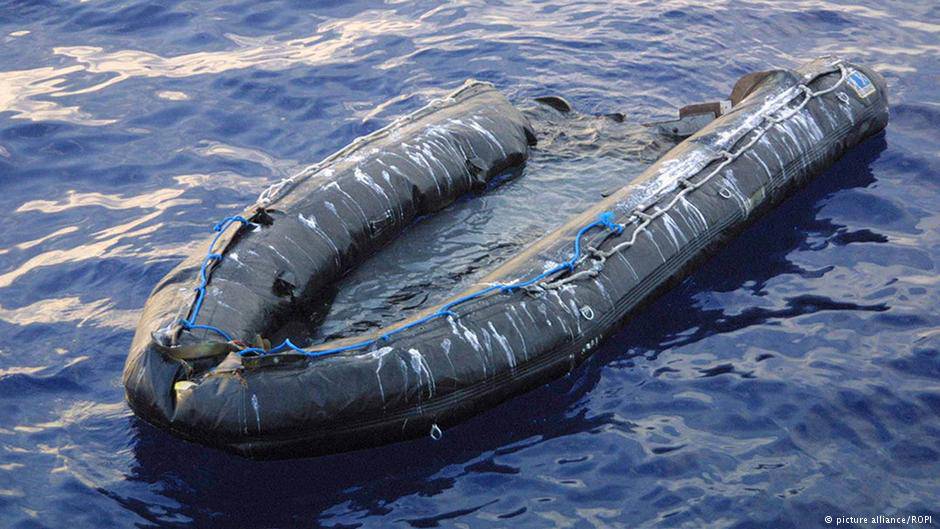
What is the case study about? We have looked at the search and rescue operations in the Mediterranean, meaning the rescue operations conducted by humanitarian NGOs to rescue migrants seeking to cross the Mediterranean Sea. We have focused on the sea stretch between Libya and Italy, so what's often called the central Mediterranean route, and looked at search and rescue operations, and how these humanitarian organizations are negotiating to be able to conduct their rescue operations. It is not self-evident how they can conduct their rescue operations even though it is an obligation at sea to bring rescue to anyone in distress. No matter who they are, where they are from, where they're headed, etcetera. But the situation in the Mediterranean is very politicized, so their room of maneuver to be able to conduct these rescue operations has been severely hindered over the past 10 years or maybe even more.
How do you go forth to research this? The aim in this project is to better understand how humanitarian negotiations are conducted, and we do that through looking at the dilemmas that humanitarians face in different instances of humanitarian negotiations. What we wanted to look at are instances of rescue operations at sea. So, in the moment of a rescue operation where people are rescued from a boat that is maybe about to sink or in a very bad state and then looking at the negotiations to ensure a safe harbor that they can go to. But then there are also negotiations with the national authorities around the authorizations to be able to dock and to go out to sea, etcetera. And there are more negotiations at an organizational level where organizations will advocate for their rights to be there and to conduct rescue operations with other EU states or EU bodies.
What we see is that there is a very particular negotiation space. Humanitarian negotiations have been discussed and conceived as negotiations that humanitarians are conducting where they need to negotiate with the parties in a conflict to be able to have access to the victims and to deliver aid. But in this instance, we have the combination of a very clear international obligation to bring rescue to people who are in a distressed situation at sea and a context where those they need to negotiate with, the European states, are not this is not an instance of armed conflict in any way. Rather the political
landscape here makes them seek to make it as difficult as possible to conduct these rescue operations. We see that some of these humanitarians are also reporting back that they see that their room to negotiate is smaller here than they have seen in other instances of armed conflict where one would think that it's more complicated. What we have done is to interview representatives from these different organizations operating in the Mediterranean and asking them to take us through how the rescue operation works, what are the dilemmas that they encounter, and then how they meet these dilemmas.
**What is the period of interest, and in which period were the interviews conducted?**
I would say that the period that serves as a backdrop for their experiences will be back to 2014 or 2016, but many of them would talk about the last few years. The specific dilemmas that we have been discussing are more relating to the current period with this Italian decree that I mentioned. The interviews were conducted between 2023 and 2024 mostly, so the interviews are quite recent.
Who is coordinating these rescue operations?
That's indeed a good question because that talks to the reason why many of these risk operations are conducted by humanitarian organizations. They're not only conducted by humanitarian organizations, but you also have commercial vessels and private vessels who happen to come across a vessel in distress and who will then bring rescue to them. You also have the coast guards of the EU member states along the Mediterranean and any state has an obligation to maintain a functioning search and rescue capacity. Any states, even Libya or Tunisia or other states, have an obligation to have a functioning search and rescue capacity. But the reason why we see many humanitarian organizations stepping in here is because more of the state-led rescue operations that were conducted some years back were dismantled in 2016. As they were dismantled humanitarian organizations saw there was still a need for rescues, because there are still refugees and other migrants seeking to cross the sea, and often doing so in what we often call unseaworthy vessels, so almost all of these boats are in a risk of being in distress while they cross. We see from 2016 and onwards more NGOs establishing themselves. Some of them started in 2014 as sort of a small individual initiative. One of them, the Catrambone couple, was started by a couple who started with their own funds. They started to use their own boats to do rescue operations and then collected more funds. Some of these NGO's were started specifically to do search-and-rescue at sea. You have SOS Mediterrane, Proactiva, and Open arms. Then you have the large established humanitarian organizations such as Doctors Without Borders, who have had large search-and-rescue ships in the Mediterranean across this period.
**Could you say then that the NGO's filled the space that was left when some of the state actors started to pull back?**
Yes, absolutely. That's what we have seen, and these organizations will argue that they need to be there as long as in a way no one else is doing that job. And so, in extension of this we see that these humanitarian organizations say that they need to be there, but they are also accused of facilitating migration across the sea. This migration to Europe has been very politicized, but also very polarizing and EU leaders are seeking any means to show that they are managing migration and controlling and seeking to reduce irregular entries into Europe. If we look at migration to Europe in general, those who arrive by sea is a very small share of it, but visually that seems like a major part of the uncontrolled or irregular arrivals. Therefore, a lot of attention is being brought to these efforts to show that these leaders have the situation under control. European leaders often want to spend a lot of efforts to show that they are taking measures to prevent further migration across the Mediterranean. And so, the humanitarian organizations are frequently accused of facilitating that migration. It ranges from those who are raising the question of how sustainable it is that they are conducting rescue operations when this is a risky route to those outright accusing the humanitarian operations of colluding with migrant smugglers and of encouraging more people to take the risky journey. So they're really saying that it's almost because of humanitarian operations that people are taking that risk as well.
**Has this criticism that some of the state-led search and rescue missions faced been moved to the NGOs and humanitarian actors since the state-led action pulled back? Is there a change in how the political environment has been discussing this after there was a change in actors?**
The backdrop to this is of course the experiences from 2015 when many more migrants sought to reach Europe. There was what is often referred to as ‘the refugee crisis’, but we should call it a ‘refugee reception crisis’, because the reception structures of Europe were overwhelmed in several places. The crisis in 2015 is the backdrop and, although we are in a new period now, it is a reference point to what many policymakers are fearing. But I would say that even if governments have shifted over the years, there has rather been a steady approach to the fact that we need to curb migration across the Mediterranean and rescues are part of the problem, so we need to contain or control how rescues are being done. But it's rather done by making the job of the humanitarian organizations doing rescues more difficult. Italy has been imposing a sort of code of conduct since 2019 on humanitarian organizations operating at sea that the organizations needed to sign. They sign up to that they will only operate in a certain space and not closer to the Libyan shores, etcetera. Some humanitarian organizations have signed, and others refused to sign. Sometimes in migration policy there can be a pendulum from more open to more restrictive policies but vis-a-vis the Mediterranean it has more so been steadily strict but seeking different tools to curb and control this migration.
In the years 2018-19, under Matteo Salvini’s time in Government in Italy he was very vocal on accusing the humanitarians of being to blame for the migrant situation. So, when a humanitarian vessel had rescued migrants, they were coming to Italy seeking to dock in a harbor there, they would be refused and told to go somewhere else. That led to very harsh standoff moments where the humanitarians were also calling the media and it was very mediatized and we would see vessels with hundreds of people on board, with people being sick and ill. Eventually in 2019 the Italian government was then happy to report that they saw a decrease in the number of migrant crossings. In these phases it been more or less difficult for the humanitarians to operate, but what we see is that it's not necessarily a direct correlation with how many are crossing – that varies from year to year and season to season – but when there is less rescue capacity, there are more drownings and more lives lost.
With the Georgia Meloni government (from 2022), there was a new Italian decree and a different approach. They want to manage the humanitarian rescue operations, not necessarily through a very mediatized standoff of ‘you stay there, you cannot come in’. They will allow the boats to come in, but they're making it more difficult across the board for them to operate. So, they will say to each vessel that they're only allowed to do one rescue at a time. Meaning if they have rescued 5 people or 15 people in an incident, taking them aboard in a large vessel, they then need to come back to land. But this large vessel could have capacity to do maybe two or three others rescues. They have food, they have space, they have medical equipment on board, and they could do more rescues and then go to land. This is a kind of subtle kind of control over their operations because it's less mediatized.
When the humanitarian organization has rescued someone from a distress situation taking them on board then they will call the Maritime Rescue Coordination Center, typically than in Italy. If they're closer to Malta, closer to Libya, they will call them first. But in practice it is often Italy who are the ones who are the most operational. This Italian decree asks all these boats to then only do one rescue at a time. But that also means that they spend more time travelling out, rescuing maybe a few people, and then having to go back. It takes a lot of time. It's much less effective, and there is more time away from where there are more needs. Yes. And they are also increasingly asked not to go to the nearest harbor. So, the SOLAS Convention of the Law of the Sea says that they should be given a port of safety, usually in the nearest port of safety, but now they're being asked more often to go to a port where they maybe need to travel for five more days rather than going to nearer port. All of this means that they spend more time away from where they can do proactive rescue.
Also, Italy will impose more administrative control over the vessels, needing to have an approval of the vessel once they dock in a harbor in Italy. So some humanitarian vessels see themselves being retained at the harbor for maybe two weeks because they have something they haven't done properly with their boats or they're waiting for an authorization. These are more subtle and what we call more administrative ways of controlling these boats and preventing them from doing rescue operations. That's more of what we've seen in the past two or three years now.
**What negotiation dilemmas were you able to identify?**
It’s important to specify that when we started to ask these humanitarian organizations what kind of dilemmas they met in the rescue operation moment, their initial answer would often be that there are no dilemmas. Maybe they would hear the word ‘dilemma’ as ‘maybe we should be here, maybe we shouldn't’, but they would answer that; there's no dilemma, there is a need for rescues, people are continuing to cross over and as long as they are doing that and as long as no one else is doing this they need to be here to proactively do search and rescue. After we disentangle this a bit more and ask them how they meet this very restricted operational space, they we were able to identify different sort of dilemmas. They wouldn't refer to them as such, but different sort of ‘concerns’ that they need to balance up against each other.
So first there is what we call the legal dilemma; how they are balancing their international obligation to bring search and rescue and the Italian decree that they also are obliged to respect. In practice this means that they may sometimes be in a situation where they have rescued someone and they hear of another instance of distress, then they are in the dilemma of obeying to this decree that asks them to just continue back to an Italian harbor or if they should then go to that other distress situation and rescue them. So that's a balance between the different legal frameworks.
Then an extension of that we see is a dilemma of the short-term and the long-term considerations between the here and now. There's a rescue need here and now. Maybe we should just make sure that we rescue this other instance. Maybe it means a detour before going back to the harbor, but we have the capacity so that's our responsibility to do that. But then they also know that they are risking their long-term access because if they do the other rescue they might be held back for longer at the harbor because they have not respected that they should only rescue one and come back.
Then the final dilemma that we identified is between the context at sea and the broader migration landscape. This also comes back to this connection between the rescue situation and the broader migration policies and the idea that if they continue to do more rescues, more migrants will come. Their response to that is very much to argue about the division of labor to say that their responsibility is purely to conduct rescue operations. There's a need, there's a rescue, there's an international obligation under the UN Convention of the Law of the Sea to bring rescues. That's what they're doing. And then it's the Italian state or the EU, that may find out if they have a right to stay or not, but that should not interfere into the rescue operation.
We also see that they have a very small room to negotiate, as opposed to other instances of humanitarian negotiations where the humanitarian actors may meet their counterparts and try to establish trust, show that we are here to bring basic aid, etcetera. There's very little of that at sea. When the rescue operation is underway or when they have rescued people from a distress situation, they will write an e-mail to the Maritime Rescue Coordination Center – it's not even by phone, there's not a conversation – asking where they can disembark. It's very impersonal. There's very little room to establish a personal relation.
What we see some of them doing is making sure to note down every step of a distress situation and rescue operation, to write down ‘this hour we received this stress call, we first called Malta, and then Italy, and then they told us…’ etcetera. That's sort of a backup for them to be able to show that they have followed the protocol and followed the rules. Some also would stress in our interviews that they would take care that their boat was in good shape. Even small details like that to make sure that there was as little as possible that they could be blamed for when they are coming back to the harbor. This is what we call ‘negotiation by compliance’, by where they're complying as much as possible in order to, when it's really needed, be able to say ‘no, we really need to do this rescue operation’.
**Lastly, I want to ask; So what? What does this tell us? How is this research useful for the public, for scholars, and for policy makers? How can we use this?**
Yes, very good question. I think that as a case study, it contributes to expanding our understanding of what humanitarian negotiations are about. It expands it from what has often been seen, in discussions among humanitarian professionals about humanitarian negotiations, as being in the context of armed conflict. It expands this to other instances that can also be very restricted and difficult to maneuver. More broadly for the public and for policymakers, I think it contributes with showing how small the room of maneuver is for those who do rescue operations at sea. I think that by showing how they operate, that there are different levels of negotiations, it shows that the operational space at sea is really affected by the way that migration is seen and sought to be controlled. Which affects also the rescue operations at sea. I hope that we can, through this case study, show how that impacts a very distressed situation where the primary concern is to rescue lives, and perhaps through that also see that these things can be disentangled to approach them better. So, to see the situation at sea as one thing and then the reception on land and the longer-term policies as other things, as a separate stage.
*This interview was conducted by Sunniva Jægtvik for the PRIO project Red Lines and Grey Zones.*