In this upcoming event, we address the review of the ethical framework for the Government Pension Fund Global and the serious questions it raises about Norway’s responsibility in relation to weapons that violate fundamental humanitarian principles.
Watch PRIO’s recent event launching the 2025/2026 edition of the Women, Peace and Security Index, which ranks 181 countries in their progress of women’s wellbeing. The event takes a closer look at what the Index can tell us about Ukraine, demonstrating the ways in which the different Index dimensions are affected by the conflict.
US President Donald Trump uses provocative, attention-seeking statements to dominate global headlines and divert focus from ongoing, serious international crises, argues Research Professor Jørgen Jensehaugen.
Russian provocations – from cutting cables on the seabed to drone incursions into the European Union – are recognized as a major challenge to transatlantic security, writes Research Professor Pavel Baev.
European policymakers are increasingly considering third-country asylum centres as a means to manage borders and limit dangerous migration routes. However, such approaches raise substantial legal and practical dilemmas, and previous experiences point to a notable risk of human rights violations, argue PRIO researchers Marta Bivand Erdal, Maria Gabrielsen Jumbert and Tone Sommerfelt.
In this podcast episode, Ajna Jusić, the founder of the Forgotten Children of War Association, and Lejla Damon, spokesperson for the organization, sit down with Research Professor Inger Skjelsbæk to talk about the situation of Children Born of War in Bosnia and internationally.
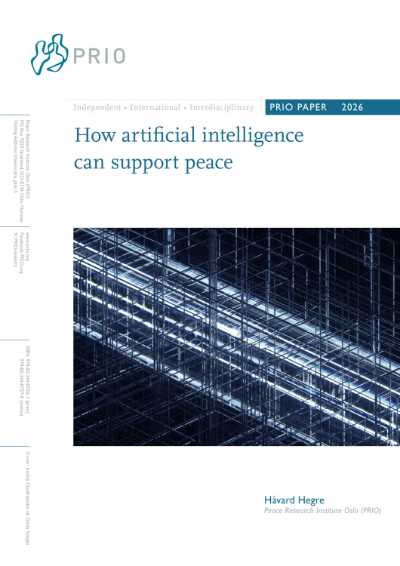
This PRIO paper explains how artificial intelligence can support peace by spotting early warning signs of conflict, improving analysis and helping policymakers act sooner to prevent or reduce violence. It stresses that AI must be used responsibly to avoid new risks or harm.
Digital technologies shape democracy in conflicting ways. Coders’ ethical views and workplace pressures often influence design decisions. These choices can weaken civil liberties and deepen a 'new digital divide' in information quality.
This book chapter explores how women, peace and security efforts are shaped by shifting geopolitical dynamics. It examines both backlash and progress in this area, and highlights the ambiguous role of the UN Security Council in advancing these agendas.
This paper introduces ‘comfortable immobility’ as a frame to understand how choosing to stay can be both a result of social mobility and a strategy that influences family aspirations, opportunities and future movement. It builds on 106 family history interviews with urban middle-class families in Hanoi, Manila, Karachi and Mumbai.
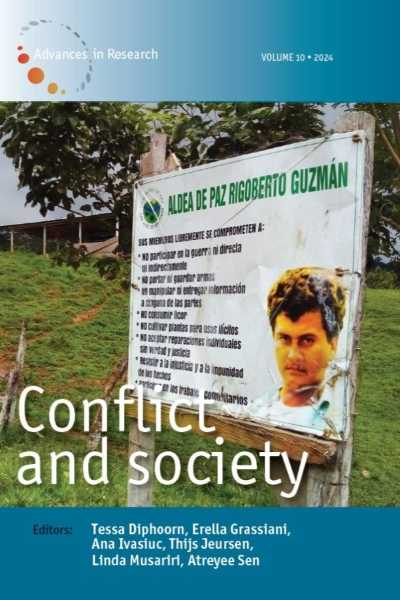
This article argues that the social media framing of ethnic groups as ‘conflict parties’ in the northeast Indian state of Manipur reinforces the idea that ethnic competition or rivalry between ethnic groups is a self-evident explanation for conflict.