A critical moment for the UN. Norway must stand up for a fair and credible selection process
Posted Thursday, 5 Nov 2026 by Simon Reid-Henry

As the United Nations prepares to select its next Secretary-General in the coming months, Norway must work to ensure that the process is fair, transparent and credible.
The UN is approaching one of the most consequential leadership transitions in its history. Wars are multiplying, international law is under mounting pressure, and multilateral cooperation is weakening. Who becomes the next UN Secretary-General will therefore matter far beyond the walls of the United Nations Headquarters in New York.
The last Norwegian to hold the position was Trygve Lie, who stepped down in 1953. Since then, only eight people have held the office, all of them men. As current Secretary-General António Guterres prepares to leave office in December, the contest to succeed him is intensifying. Over the summer, seven candidates have entered the race, five of them women. But there is no guarantee that any of them will take office in January. The entry into the race last week of a new candidate backed by the United Arab Emirates (UAE) is a reminder of just how unpredictable the process remains.
More conclave than election
The problem lies in the outdated way the UN selects its top official. Before the General Assembly can approve a candidate, that person must first be recommended by the Security Council. This requires the support of at least nine of its 15 members, with no veto from any of the five permanent members: the United States, China, Russia, France and the United Kingdom.
The process bears less resemblance to a democratic election than to the selection of a pope, with the world waiting for white smoke to emerge from the conclave.
The risks are particularly high this time around. Two of the permanent members, Russia and the United States, are involved in military conflicts that they would prefer to keep the UN out of. This increases the likelihood that one of the five permanent members could push through an unexpected candidate, or that the process could become deadlocked altogether as January approaches.
Two outcomes the UN can scarcely afford
Both scenarios have occurred before, but they are particularly troubling in today's geopolitical climate.
If no new Secretary-General has been selected by 1 January, the UN could find itself without an independent leader able to bring global crises before the Security Council, help resolve conflicts or simply ensure that a budget is adopted.
The incumbent Deputy Secretary-General could, of course, serve as acting head of the organisation, potentially following an initiative by the General Assembly. But this is unlikely to provide the strong and credible leadership the UN needs. When Trygve Lie was reappointed for a further term through a similar arrangement, the outcome was that he had to leave office before his term was over.
The second risk is that a surprise candidate could emerge at the eleventh hour, as happened last week with the UAE's Lana Nusseibeh. Such candidates can, of course, turn out to be excellent choices. Kofi Annan was recommended by the Security Council in 1996 after the dispute over Boutros Boutros-Ghali had produced a deadlock and four new candidates. Annan went on to become an accomplished Secretary-General.
But candidates who enter the race late have less time to prepare for an exceptionally demanding role and are generally subject to less thorough scrutiny. Nor do some of the alternatives that Trump has flirted with in 2026 – Gianni Infantino or Viktor Orbán as Secretary-General, anyone? – inspire much confidence.
What Norway should do
Norway cannot determine whom the Security Council puts forward as the next UN Secretary-General. But it can help ensure that the selection process is better conducted.
Under the principle of regional rotation, the next Secretary-General should come from Latin America or the Caribbean. In addition, a global campaign has long argued that the time has come for a woman to hold the office.
Above all, Norway should use its voice to support these calls for a fair and orderly selection process. It should also insist that candidates entering the race late are subjected to the same rigorous scrutiny as the others, including through public hearings and the publication of their vision statements.
A turning point for the UN
Norway has long been a prominent voice in efforts to reform the selection process. Now it should use its influence within UN groupings such as the Accountability, Coherence and Transparency (ACT) Group to defend a thorough and credible selection process.
The appointment of a new Secretary-General comes at a critical juncture in the UN's history, just as Norway's own development assistance policy is approaching what has been described as a turning point.
In the weeks ahead, Norway must stand firm in insisting that the selection process is both legitimate and completed on time. Otherwise, the UN risks finding itself at an endpoint rather than a turning point.
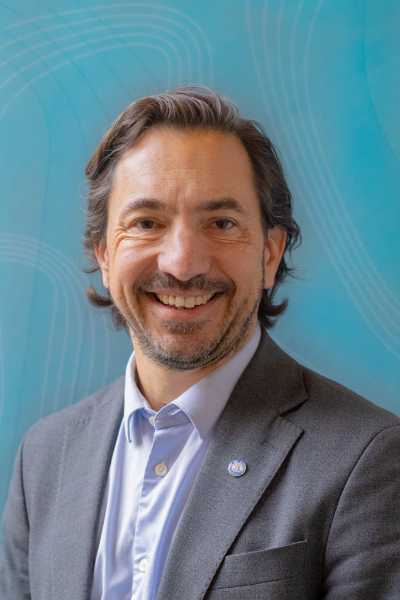
- Simon Reid-Henry is a Research Professor at PRIO
- This text was published in Norwegian by Aftenposten 31 October 2026
Related comments