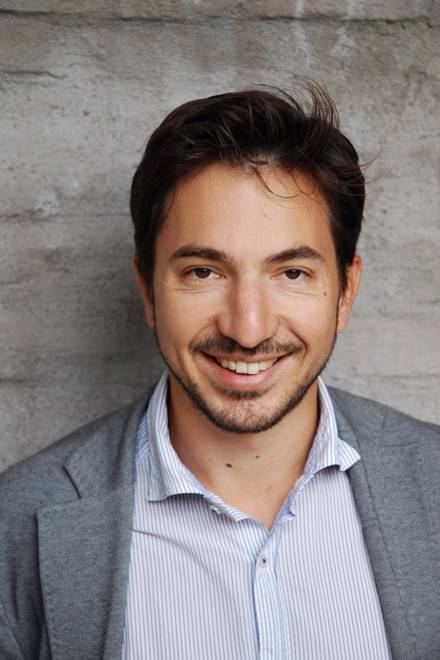
Simon is Research Professor at PRIO where he leads the Institute's work on Multilateral Affairs. A geographer by training his research applies an interdisciplinary focus to the making and application of political, economic, technical and legal forms of knowledge and their consequences for political thought and practice. This has been a consistent interest of his since his earliest work on the history and politics of alternative models of scientific innovation in biomedical research, through to more recent examinations of humanitarianism, global health, development, migration, security, inequality and democracy. Simon's work has been recognized for its methodological innovation, conceptual rigour, and empirical breadth via a number of academic fellowships and awards.
At PRIO, Simon overseas two research projects (BIO-FUND and PAND-FUND) which look at the climate-health-financing nexus and which explore new ways of measuring and resourcing global public goods and the management of global public bads. Simon previously led the FriPro project, Co-Duties, also funded by the Research Council of Norway, which explored some of the political consequences of public health policies during the COVID-19 pandemic. Elsewhere he has been engaged in projects examining alternative (non-Rawlsian) framings of "global justice", as these have emerged in response to particular events and developments in world history, and not simply in relation to normative political philosophical reasoning, and in a re-reading of the work of influential "global" thinkers on justice and equality in the 20th century, particularly those like Gunnar Myrdal who specifically sought to tackle head on the emergence of global challenges to national political institutions.
Simon's last book was a major historical work addressing the tension between freedom and equality in the liberal democratic west. Through a narrative reckoning with contemporary western liberal democracy, beginning in the crises of the 1970s and ending in the upheavals of the present moment, Empire of Democracy: the remaking of the West since the Cold War (Simon & Schuster, 2019) offers a panoramic analysis of the major social, political-economic, and intellectual trends that have shaped the "post-Consensus era" in recent history. The book was a Foreign Affairs Book of the Year and builds on his previous work on global inequality, The Political Origins of Inequality: Why a more equal world is better for us all (Chicago University Press, 2015) by focusing in detail on the political and intellectual context in which freedom came to be prioritized over equality in contemporary liberal democratic societies.
In addition to his academic work Simon is also an influential voice in international policy and practice, including one of the original thinkers behind the emergent paradigm of Global Public Investment and formerly as Co-Chair of the Global Public Investment Network, which he co-founded in 2022. He now leads this work through the "Coalition of Governments and International Organisations for GPI", a UN Financing for Development initiative launched in June 2025 as part of the Seville Platform for Action agenda in partnership with the Club de Madrid and the Development Bank of Latin America and the Caribbean. Simon has advised numerous governments and international organisations. He is an Honorary Professor at Queen Mary University of London and in 2023 was a Visiting Professor at the Graduate Institute in Geneva. Further information can be found at www.simonreidhenry.com