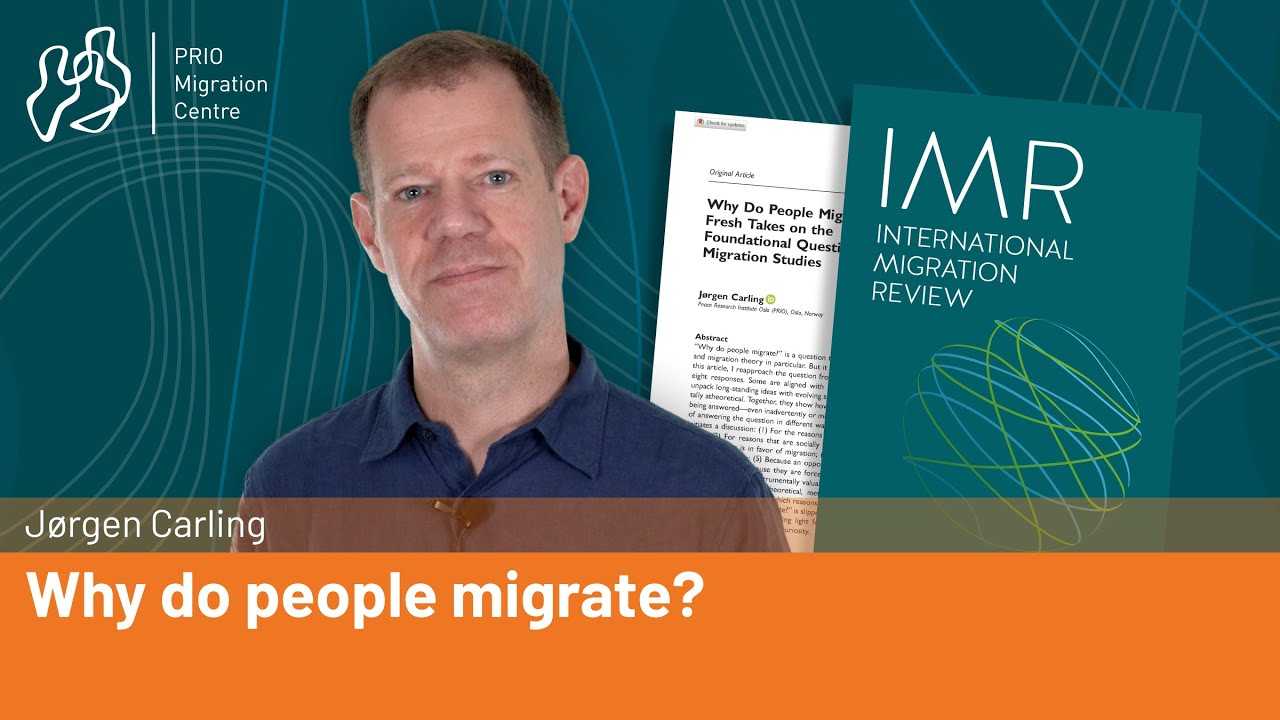

Research Professor Jørgen Carling's article "Why Do People Migrate? Fresh Takes on the Foundational Question of Migration Studies" has for the past year been the most-read article in the International Migration Review, which is often regarded as the leading journal in migration studies. It has been read or downloaded 22,000 times since it was published two years ago.
"The question 'why do people migrate?' is a staple of introductory courses, but rarely addressed heads-on by researchers" said Jørgen Carling. "My strategy was to examine how this question underpins a lot of research and public debate, and to address how it can, should, or should not be answered."
The article argues, among other things, that the categories of immigration policy cloud a solid understanding of motivations. For instance, "family migration" has come to be seen as migration that is governed by residence permits for family formation and family reunification. However, family dynamics motivate migration in much broader ways.
The question 'why do people migrate?' also alludes to the complexity of giving a reason. It can refer to migrants' own explanation for their migration, to how other stakeholders make sense of it, or to the factors that help understand why some people migrate while others don't.
The article is one of the outputs from the project Future Migration as Present Fact, which combines field research in West Africa with theory development. It connects with other research on migration dynamics at the PRIO Migration Centre, for instance examining how people decide to flee conflict, and how migration is intertwined with class formation.