The first Oscarsborg Symposium gathered Nordic leaders, experts, and scholars to reflect on Nordic communication strategies and managing disinformation at a time of rising geopolitical tensions. The aim was to develop better joint understandings of issues at stake in the region in order to strengthen Nordic cohesion.
Over two days in October 2025, participants engaged in frank debates on two critical communication challenges for preparing the population to handle this new situation:
- How the Nordic countries conduct public communication to raise war risk awareness
- How they counter disinformation targeting Nordic cooperation and cohesion on defense and national security.
The aim was to identify key similarities and differences of importance when seeking to strengthen Nordic cooperation. For Nina Græger, Director of PRIO, the Symposium was a timely reminder of the value of cross-border dialogue.
Louise Olsson, who led the Symposium, noted that it was the product of a collaborative initiative involving the PRIO team, the Sat Sapienti Foundation, and stakeholders from leading organizations in the Nordic region. She warmly thanked all those who had supported the effort and those participating in the Symposium.
The confidential setting is key in enabling open and candid exchanges. Olsson emphasized the importance of exploring both shared practices and key differences across the region, while reflecting on how our long history continues to shape current partnerships and future opportunities.
Nordic communication strategies on rising war risk and their weaknesses
The first day of the Symposium explored how Nordic states communicate the rising risk of war to their citizens. Anna Starbrink, Deputy Director General at the Swedish Civil Contingencies Agency (from January 1 2026, the Civil Defence and Resilience Agency), opened the discussion by highlighting the rationale behind Sweden's preparedness brochure, "If crisis or war comes", and outlining its key contents. This included the reasons for explicitly using the word war - a terminology which varies between the Nordic countries - and strategies used to sustainably encourage citizens to take an active role in preparedness planning. Participants then compared the different strategies adopted across the region: Sweden and Norway have openly framed preparedness in terms of possible conflict, while Finland and Denmark have tended to emphasize broader crisis scenarios. These divergences reflect differences in history, geography and public expectations, but they also shape how resilient societies may become in times of tension.
Speakers highlighted valuable lessons from past experiences with crisis communication, such as during the Covid-19 pandemic, illustrating how nationally focused communication still travels across the Nordic borders and affects perceptions of cooperation.
Countering disinformation against Nordic security cooperation and cohesion
The second day shifted focus to disinformation campaigns that deliberately target Nordic cohesion and security cooperation. Participants discussed the growing challenges posed by hybrid threats, including how to distinguish between misinformation and deliberate manipulation.
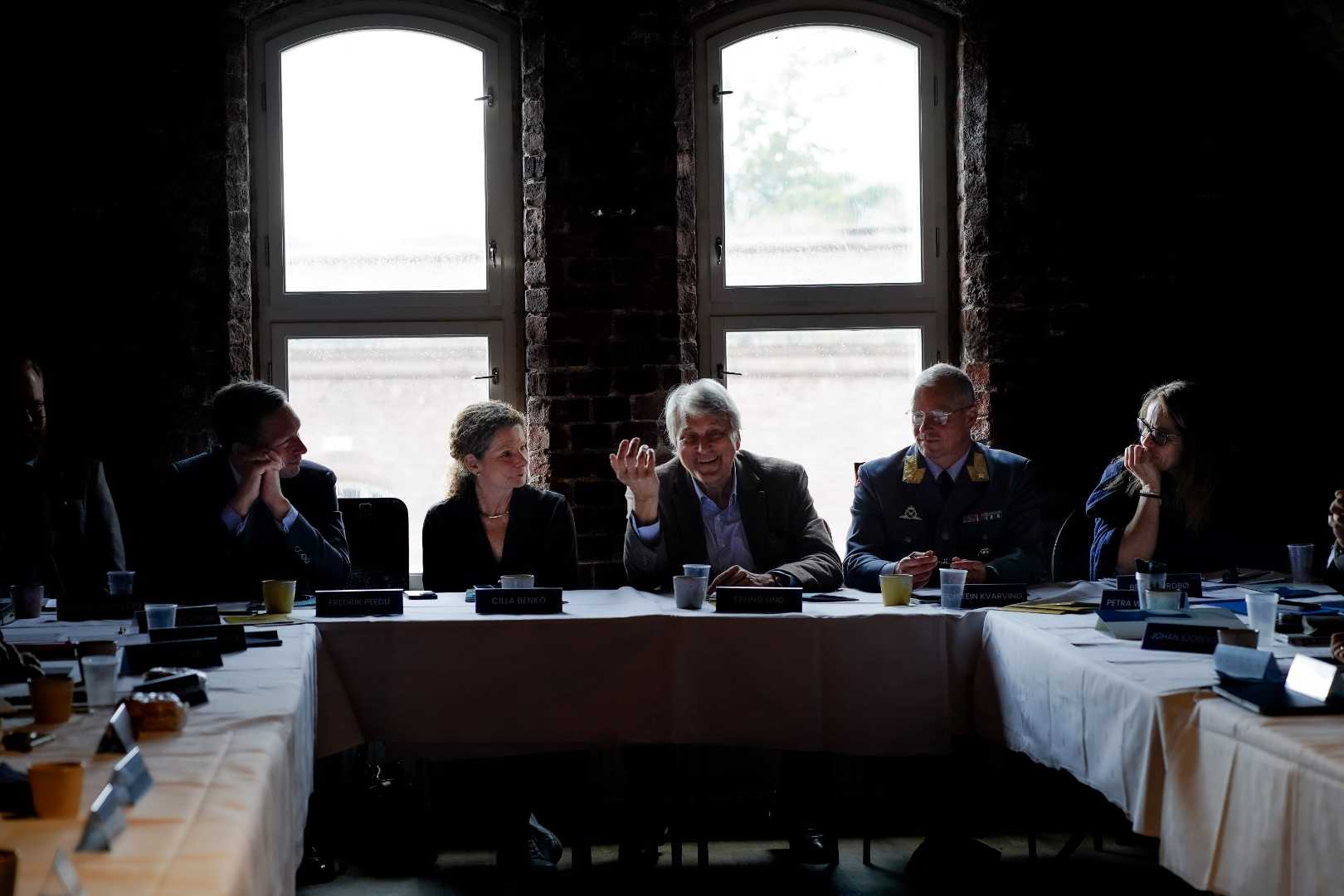
Trust emerged as a recurring theme throughout the Symposium, not least in relation to the role of the media. High levels of trust in state institutions and media were seen as both an asset and a vulnerability, requiring careful strategies to preserve open debate while safeguarding against harmful influence. Cilla Benkö, Director General & CEO of Swedish Radio, emphasized the importance of having journalists on the ground to verify information, and Mikko Salo, Founder & CEO of the Finnish digital information literacy and fact-checking service, Faktabaari, highlighted the importance of trust in a society in order for fact-checking to be effective.
By drawing on past experiences, identifying current vulnerabilities and imagining future scenarios, the 2025 Oscarsborg Symposium contributed to strengthening Nordic preparedness. The discussions highlighted the need for honest communication, resilient societies and sustained cooperation if the Nordic countries are to confront the dual challenges of war risk and disinformation in an uncertain security landscape.
The two-day symposium was made possible with the generous support of the Sat Sapienti Foundation.