Olsson’s research focuses on the gender dynamics of war, conflict resolution effects on women’s rights, and WPS in national defense. She is associated with the Centre of Excellence for the Elimination of Violence against Women at Monash University and the ERC project Peace Dividends and Post-conflict Reconstruction project at Essex University and is engaged in promoting research impact. For ex. she has served as a coach on gender integration to the Supreme Commander of the Swedish Armed Forces.
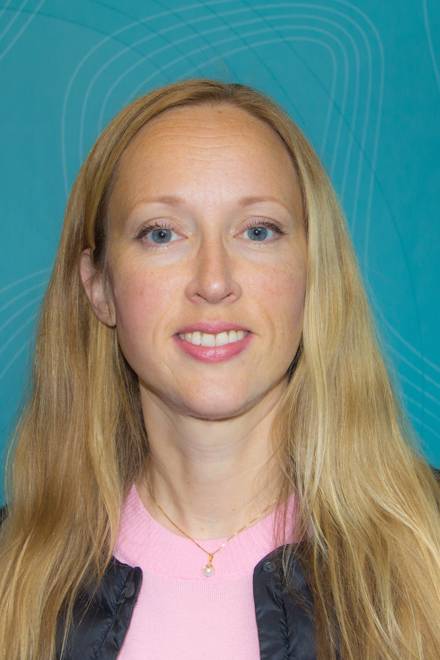
Louise Olsson
Senior Researcher
Interests and experience
Louise Olsson is a Senior Researcher and former Research Director at PRIO. She leads the Gender Research Group and her research focuses on the gendered dynamics of war, effects of conflict resolution on women’s rights, and Women, Peace and Security (WPS) in Nordic national security and defense policies and implementation. She is the author of articles appearing in International Negotiations, Global Governance, Social Science Research, Journal of Global Security Studies, and International Peacekeeping.
Olsson is engaged in promoting the effective use of research results and approaches in decision-making and policy formulation. For example, she has been part of arranging a series of Dialog Forums to support the Ministry for Foreign Affairs during Norway’s term in the UN Security Council 2021-2022. Olsson also regularly contributes to course at the Nordic Center for Gender in Military Operations and to the Swedish Armed Forces’ senior leadership training program on gender equality. For example, she has acted as a coach to the Supreme Commander and to the Chief of Joint Operations. Prior to coming to PRIO, she worked in the Swedish government agency, the Folke Bernadotte Academy (FBA), as a Senior Advisor to the leadership on gender mainstreaming and WPS.
As part of her work at FBA, she organized an international research group (2009-2018) with the aim to promote systematic empirical research of relevance for the implementation of WPS. Olsson has also served as Chair of the International Studies Association's (ISA) Professional Development Committee (April 2022- April 2024) and as a member of the ISA's Research and Workshop Committee (2016-2018).
Olsson got her PhD from the Department of Peace and Conflict Research at Uppsala University in 2007 but began her career in 1999 by contributing to the UN-led project Mainstreaming a Gender Perspective in Multidimensional Peace Operations which produced the Windhoek Declaration and held its final workshop in Windhoek in May 2000.
Current and former projects:
Olsson's expertise in gender and WPS in national security and defense and the dynamics of war and its resolution has been developed since 1999. A number of projects have allowed for going more in-depth into specific sub-areas, for example:
WPS and Nordic national security and defense.
- A multi-level analysis of societal security and preparedness in Sweden and Norway (2025-2027) led by Roxanna Sjöstedt, Lund University. The project proposes a multi-layered approach that examines how three different levels – the political elite, government agencies, and the general public in Sweden and Norway – frame and act to handle the rising threat. Olsson's contribution focuses on gender equality and the integration of Women, Peace and Security in total defense processes.
- Should I stay or Should I go? (2020-2025) with co-project leader Chiara Ruffa, Erik Melander, and Sara Lindberg-Bromley, Uppsala University. The project asked: What determines if women choose to leave or to stay employed in a the Swedish Armed Forces? Addressing that question is key for being able to establish a more gender-equal workplace. Olsson studied the role of senior military leaders for gender integration and WPS in military organizations. The project was funded by the Swedish Research Council on Health, Working Life and Welfare.
- Women, peace, and security in the defense of Sweden (2019-2021) located at Uppsala University. With the return to a focus on national defense, this project studied issues regarding the protection and resilience of the population and the role of gender equality and the norm on Women, Peace and Security in a national defense and security context. The project was funded by the Swedish Armed Forces.
- Reducing Barriers for Women in the Norwegian Armed Forces' Peacekeeping Contributions (2020-2021) with the Geneva Centre for Security Sector Governance (DCAF) and Sabrina Karim at Cornell University. The aim of the project was to assess the relative importance of barriers for Norwegian women and men's deployment to UN and NATO military missions. Funded by DCAF.
Gendered dynamics of war
- The Waging of War (2025-2029), ERC led by Scott Gates, University of Oslo. The project aims to fill a critical gap in our understanding of warfare – not its origins or endings, but how wars are actually fought. Olsson contributes gender expertise into the analysis of organization, recruitment and behavior of military organizations.
- The Inclusion of Women in Ceasefire Processes (2023). This project, led by Siri Rustad, aims to examine both under which circumstances women are included in ceasefire processes and how their inclusion affected the dynamics of the negotiations, including the potential adoption of gender provisions in the agreement. Funded by the Norwegian Ministry of Foreign Affairs.
- Inequality and insurgency in India: a disaggregated analysis of the link between gender inequality and armed conflict (2015-2018 with Erika Forsberg, Uppsala University). By combining fieldwork with statistical analysis of new micro-level data on India’s 640 districts, this project sought to improve our understanding of the mechanisms behind gender inequality and violent conflict. Funded by the Swedish Research Council.
- Disciplining Fighters: Understanding Armed Political Actors’ Control of Sexual Violence (2016-2019). with project leader Angela Muvumba-Sällström, Uppsala University. The project studied why and how diverse types of armed groups, with their varied agendas, motivations, institutions and gradations of sociality during wartime, create preventive cultures and pathways. Funded by the Swedish Research Council
Conflict resolution and women’s rights
- Women's empowerment in Peace Processes (EMPOW) with Uppsala University (2025-2027). The EMPOW project will contribute to the understanding of women's agency and the role of gender reforms by creating two interoperable datasets: EMPOW Agency and EMPOW Reform. Furthermore, by ensuring compatibility with leading crisis data, such as the Uppsala Conflict Data Program (UCDP), PAX and VDEM, we can generate and harmonize data on women’s empowerment across all phases of the peace process– from pre-negotiations to post-war peacebuilding. Funded by CRAFd.
- The Peace Dividends and Post-conflict Reconstruction project (2024-2028), ERC led by Ismene Gizelis, Essex University. This project takes an ambitious, encompassing approach to post-conflict reconstruction. This involves formulating a Peace Dividend Matrix to systematically measure progress. This matrix maps positive outcomes from peacekeeping along three dimensions: 1) human development; 2) political inclusion and gender equality; and 3) state capacity as measured by taxation and public finances.
- Tracking and analyzing WPS in the Security Council in real time. This project examined whether the UN Security Council is moving from rhetorical commitment to substantive action on Women, Peace and Security. Chang and Olsson conducted real‑time analysis of WPS language in resolutions adopted in 2021 and systematically back‑codes resolutions from 2015 onward—when both the Global Study and UN Security Council resolution 2242 called for deeper scrutiny of the Council’s own implementation. Funded by the Norwegian Ministry of Foreign Affairs, the project identified trends, gaps, and the degree to which WPS is embedded in the Council’s routine decision-making.
- Shattering glass: African Elected Members of the UN Security Council and the Fight for Women, Peace and Security (2021-2025) Led by Angela Muvumba Sellström at the Nordic Africa Institute, this qualitative study redirects attention from the Security Council as a monolithic actor to the agency of elected African member states. It analyzes how these states strategize, negotiate, and advance WPS priorities in the Council. Olsson and Jormanainen contributed to model how states articulate their WPS positions and how these choices shape practical implementation. Funded by the Swedish Research Council.
Projects
All projects
Jan 2026 – Dec 2030
The Waging of War (WoW)
The Waging of War (WoW)
Jun 2025 – Jun 2027
Women’s Empowerment in Peace Processes (EMPOW)
Women’s Empowerment in Peace Processes (EMPOW)
Dec 2024 –
Survey on Attitudes Towards the Role of Women in Ukraine
Survey on Attitudes Towards the Role of Women in Ukraine
Nov 2024 – Dec 2027
All Aboard!? A multi-level analysis of societal security and preparedness in Sweden and Norway
All Aboard!? A multi-level analysis of societal security and preparedness in Sweden and Norway
Jun 2024 – Dec 2028
The Peace Dividends and Post-conflict Reconstruction project (Peace Dividends)
The Peace Dividends and Post-conflict Reconstruction project (Peace Dividends)
Jun 2023 –
Oscarsborg Symposium on Nordic Security
Oscarsborg Symposium on Nordic Security
Nov 2020 –
New Insights on Women, Peace and Security
New Insights on Women, Peace and Security
Aug 2024 – Jan 2025
The Role of the Business Sector in Nordic Defense and Societal Preparedness
The Role of the Business Sector in Nordic Defense and Societal Preparedness
Mar 2023 – Dec 2023
The Inclusion of Women in Ceasefire Processes
The Inclusion of Women in Ceasefire Processes
Jan 2022 – Aug 2022
Does Gender Matter? The Effect of Gender Equality on Campaign Success
Does Gender Matter? The Effect of Gender Equality on Campaign Success
Latest publications
All publications
Louise Olsson et al. (2026)
Societal Impact in a Turbulent World: Researcher Competencies and Career Pathways
Societal Impact in a Turbulent World: Researcher Competencies and Career Pathways
Journal article in International Studies Perspectives
Louise Olsson (2026)
Tre myter og en begrensning om likestilling og totalforsvar
Tre myter og en begrensning om likestilling og totalforsvar
Popular article in Forsvarets forum
Sarah Dorr, Birthe Einen & Louise Olsson (2026)
As impact is increasingly found in non-academic careers, what skills do PhD students need now?
As impact is increasingly found in non-academic careers, what skills do PhD students need now?
Popular article in LSE Impact: Understanding impact and practice in academic research
Louise Olsson & Torunn L. Tryggestad (2026)
Backlash and Progress in a New Geopolitical Reality: Women, Peace and Security and the Ambiguous Role of the UN Security Council
Backlash and Progress in a New Geopolitical Reality: Women, Peace and Security and the Ambiguous Role of the UN Security Council
Book chapter in Backlash Against the Women, Peace and Security Agenda. Norm Research in International Relations.
Louise Olsson (2025)
Sverige, resolution 1325 och forskningssamverkan i en försämrad säkerhetssituation i Norden
Sverige, resolution 1325 och forskningssamverkan i en försämrad säkerhetssituation i Norden
Journal article in Internasjonal Politikk
Louise Olsson (2024)
Time to Push for Next Step on Women, Peace and Security: Ensuring Positive Impact for Women in Conflict
Time to Push for Next Step on Women, Peace and Security: Ensuring Positive Impact for Women in Conflict
Popular article in The Global Observatory
Louise Olsson & Birthe Einen (2024)
The Nordics in NATO: Women, Peace and Security and Regional Defense
The Nordics in NATO: Women, Peace and Security and Regional Defense
GPS Policy Brief
Louise Olsson, Patty Chang & Angela Muvumba Sellström (2023)
Examining E10 Strategies and Decisions: Sweden and Women, Peace and Security in the UN Security Council
Examining E10 Strategies and Decisions: Sweden and Women, Peace and Security in the UN Security Council
Journal article in Global Governance: A Review of Multilateralism and International Organizations
Louise Olsson & Chiara Ruffa (2023)
Tensions in Retention during Military Transformation: Lessons from Re-establishing a Total Defence in Sweden
Tensions in Retention during Military Transformation: Lessons from Re-establishing a Total Defence in Sweden
Book chapter in Total Defence Forces in the Twenty-First Century
Louise Olsson, Niels Nagelhus Schia & Birthe Einen (2023)
Dialogforum – Norges rolle i Sikkerhetsrådet og den kunnskapsbaserte bærebjelken
Dialogforum – Norges rolle i Sikkerhetsrådet og den kunnskapsbaserte bærebjelken
Journal article in Internasjonal Politikk
Latest news
All news
Tuesday, 18 Aug 2026
Navigating Gender Equality in Maritime Defence: A leadership perspective
Navigating Gender Equality in Maritime Defence: A leadership perspective
In August, PRIO Senior Researcher Louise Olsson contributed to a seminar for senior leaders in the Norwegian Navy.
Tuesday, 16 Jun 2026
PRIO researchers engage with NATO Committee on Gender Perspectives
PRIO researchers engage with NATO Committee on Gender Perspectives
PRIO contributes research insights to the NATO Committee on Gender Perspectives (NCGP)’s innovative efforts on gender perspectives in whole-of-society approaches and civilian protection.
Friday, 29 May 2026
PhD course on Gender, Peace and Conflict successfully convened
PhD course on Gender, Peace and Conflict successfully convened
As part of the NORHED II project Partnership for Peace: Better Higher Education for Resilient Societies , PRIO and the PRIO Centre on Gender, Peace and Security hosted a PhD-level course on Gender, Peace and Conflict, from May 27 to 29.
Friday, 29 May 2026
Looking for Horizon Europe partners? Explore PRIO’s new EU Matchmaking Guide
Looking for Horizon Europe partners? Explore PRIO’s new EU Matchmaking Guide
PRIO has developed a new EU Matchmaking Guide to support organisations preparing project proposals under Horizon Europe in identifying relevant researchers.
Thursday, 28 May 2026
Norwegian security in transition: PRIO contributes to Security Forum South 2026
Norwegian security in transition: PRIO contributes to Security Forum South 2026
Norwegian security is undergoing profound change—from diversifying strategic partnerships to reorganising local preparedness. This was the focus of the 2026 Security Forum South.
Wednesday, 27 May 2026
PRIO’s first European Security Week
PRIO’s first European Security Week
PRIO’s first European Security Week brought together researchers and experts for a series of debates on the future of European security.
Wednesday, 29 Apr 2026
Evidence, Data, and Empowerment - Research supporting women's agency and gender equal reforms post war
Evidence, Data, and Empowerment - Research supporting women's agency and gender equal reforms post war
Women’s Empowerment in Peace Processes (EMPOW) and Women’s Activities in Armed Rebellion (WAAR) research teams met for a workshop on the role of data in promoting gender-equal peace.
Thursday, 5 Mar 2026
PRIO supports Norwegian Ministry of Defense efforts on Women, Peace and Security in Total Defense
PRIO supports Norwegian Ministry of Defense efforts on Women, Peace and Security in Total Defense
In line with Norway’s Action Plan on Women, Peace and Security (WPS), the Ministry of Defense organized an internal seminar on WPS and gender equality in total defense on 28 January. PRIO's Louise Olsson presented her research.
Friday, 30 Jan 2026
Call for PhD-Level Course on Gender, Peace and Conflict
Call for PhD-Level Course on Gender, Peace and Conflict
PRIO is offering a PhD-level course examining how gender shapes all phases of the conflict cycle—from conflict risk and prevention to mediation and peacemaking.
Thursday, 11 Dec 2025
PRIO contributes to Japan’s program on forming a new generation of researchers on gender equality
PRIO contributes to Japan’s program on forming a new generation of researchers on gender equality
How can we amplify youth engagement and foster cross-border learning on gender equality to tackle tomorrow’s challenges on peace and security?
Latest events
All events
Monday, 18 May 2026 12:00–13:30 UTC+02
Norway’s role in a rapidly evolving European security landscape
Norway’s role in a rapidly evolving European security landscape
Monday, 22 Jan 2024 15:00–16:30 UTC+01
Civilians Living with Organized Violence: Protective Strategies and Agency
Civilians Living with Organized Violence: Protective Strategies and Agency
Tuesday, 15 Aug 2023 17:00–18:30 UTC+02
Nordisk sikkerhet: Norge og Sverige – forskjeller og likheter
Nordisk sikkerhet: Norge og Sverige – forskjeller og likheter
Thursday, 18 Aug 2022 10:00–11:30 UTC+02
UN Security Council Post-Ukraine: What Role for Norway?
UN Security Council Post-Ukraine: What Role for Norway?
Friday, 4 Feb 2022 15:00–16:30 UTC+01
One Year On: Norway and the Women, Peace and Security Agenda in the UN Security Council
One Year On: Norway and the Women, Peace and Security Agenda in the UN Security Council
Thursday, 9 Dec 2021 08:30–10:00 UTC+01
Masculinity and Militarism - Moving Beyond Stereotypes
Masculinity and Militarism - Moving Beyond Stereotypes
Tuesday, 9 Nov 2021 15:00–16:30 UTC+01
Civil Society Briefers in the UNSC: Past, Present and Future
Civil Society Briefers in the UNSC: Past, Present and Future
Friday, 29 Oct 2021 09:00–10:15 UTC+02
Engaging Men for Gender Equality
Engaging Men for Gender Equality
Tuesday, 12 Oct 2021 15:00–16:30 UTC+02
Looking Back and Reflecting: Sweden’s Engagement with Civil Society in 2017-18
Looking Back and Reflecting: Sweden’s Engagement with Civil Society in 2017-18
Wednesday, 23 Jun 2021 13:00–14:30 UTC+02
The Elected Ones: Taking Care of Business in the UN Security Council, a study on Sweden (2017-18)
The Elected Ones: Taking Care of Business in the UN Security Council, a study on Sweden (2017-18)
Latest comments
All comments
Wednesday, 10 Dec 2025
Commanding change: What can we learn from the Swedish Armed Forces’ leadership program on gender equality?
Commanding change: What can we learn from the Swedish Armed Forces’ leadership program on gender equality?
Friday, 1 Mar 2024
What Has Peacekeeping Ever Done for Us?
What Has Peacekeeping Ever Done for Us?
Tuesday, 21 Jun 2022
Should We Abandon the UN Security Council as an Anchor for Women, Peace and Security? Personal Reflections from New York
Should We Abandon the UN Security Council as an Anchor for Women, Peace and Security? Personal Reflections from New York
Tuesday, 24 May 2022
Украинские женщины участвуют в сопротивлении и должны участвовать в мирных переговорах: новые данные опросов
Украинские женщины участвуют в сопротивлении и должны участвовать в мирных переговорах: новые данные опросов
Saturday, 30 Apr 2022
Українські жінки беруть участь в опорі і мають брати участь у мирних перемовинах: результати нового опитування
Українські жінки беруть участь в опорі і мають брати участь у мирних перемовинах: результати нового опитування
Friday, 29 Apr 2022
Ukrainian Women Engage in Resistance and Should Be in the Peace Talks: New Survey Evidence
Ukrainian Women Engage in Resistance and Should Be in the Peace Talks: New Survey Evidence
Tuesday, 29 Mar 2022
Representation Is Not Enough: Women Briefing the UN Security Council
Representation Is Not Enough: Women Briefing the UN Security Council
Wednesday, 10 Nov 2021
What Do We Know About State-Civil Society Engagement for Women, Peace and Security in the UN Security Council?
What Do We Know About State-Civil Society Engagement for Women, Peace and Security in the UN Security Council?
Wednesday, 3 Mar 2021
A Critical Moment for Women’s Political Rights in Intra-Afghan Negotiation and Beyond
A Critical Moment for Women’s Political Rights in Intra-Afghan Negotiation and Beyond
Tuesday, 23 Jun 2020
The COVID-19 Crisis Spotlights Criticality of Women’s Participation and UNSCR 1325: A Policy-Research Exchange
The COVID-19 Crisis Spotlights Criticality of Women’s Participation and UNSCR 1325: A Policy-Research Exchange
Recorded event
Norway’s role in a rapidly evolving European security landscape
Norway’s role in a rapidly evolving European security landscape
Recorded event
Civilians Living with Organized Violence: Protective Strategies and Agency
Civilians Living with Organized Violence: Protective Strategies and Agency
Recorded event
Nordisk sikkerhet: Norge og Sverige – forskjeller og likheter
Nordisk sikkerhet: Norge og Sverige – forskjeller og likheter
Recorded event
One Year On: Norway and the Women, Peace and Security Agenda in the UN Security Council
One Year On: Norway and the Women, Peace and Security Agenda in the UN Security Council
Recorded event
Masculinity and Militarism - Moving Beyond Stereotypes
Masculinity and Militarism - Moving Beyond Stereotypes
Recorded event
Engaging Men for Gender Equality
Engaging Men for Gender Equality
Recorded event
Norway’s first 100 days on the UN Security Council: Living up to expectations?
Norway’s first 100 days on the UN Security Council: Living up to expectations?
In the media
October 2023
PRIO Researcher Louise Olsson’s participation in the 47th NATO Committee on Gender Perspectives Annual Conference was mentioned in by the news site Mirage News and the site Fraksion.
PRIO started listing media appearances on profiles in 2023. Earlier media appearances may not be listed.
Work positions
2026–
Senior ResearcherPeace Research Institute Oslo (PRIO)
2017–
Senior ResearcherPeace Research Institute Oslo (PRIO)
2022–2026
Research DirectorGlobal Politics, Norms and SocietyPeace Research Institute Oslo (PRIO)
2019–2021
Researcher (part time).Department of Peace and Conflict Research, Uppsala UniversityProject on Women, Peace and Security in Swedish Military Defense funded by the Swedish Armed Forces
2019–
Coach and lecturer, Senior leadership training program on gender equality (hourly basis)Swedish Armed ForcesSupports training programs running from 2019 and onwards
2016–2018
Senior Advisor on Women, Peace and Security and Gender MainstreamingFolke Bernadotte Academy (FBA), Sweden
2011–2016
Researcher and Head of the UNSCR 1325 Program, incl. of policy and researchFolke Bernadotte Academy
2008–2012
Assistant professor and lecturer (part time).Department of Peace and Conflict Research. Uppsala University
2008–2011
Project leader and researcherFolke Bernadotte Academy
2007–2008
ConsultantSwedish Defense College (funder). Project: “Implementing resolution 1325 in the Nordic Battlegroup”.
2007–2008
Director of Studies and Assistant professor Department of Peace and Conflict Research, Uppsala University
Education
2007
PhD
Uppsala University
Other positions and memberships
2022–2024
Chair, Professional Development Committee
International Studies Association
2019–
Leader, PRIO Gender Research Group
PRIO
2018–2019
Senior Expert on Focus area E: Women and Armed Conflict
ICF Contribution to the European Institute for Gender Equality's "Study to review the implementation of the Beijing Platform for Action in the EU – Beijing +25"